Project Description: In 2016, the bacterium Ideonella sakaiensis strain 201-F6 impressed researchers with its natural ability to biodegrade polyethylene terephthalate (PET) and assimilate its carbon. PET, used in the production of plastic bottles and more, is the most common form of plastic pollution. Genetic modification of the oligotrophic unicellular alga, Chlamydomonas reinhardtii strain CC-277, with the plastic degrading operons from I. sakaiensis, provides eco-friendly breakdown of PET. C. reinhardtii has been studied for decades and is known to be safe to humans, unlike recently discovered I. sakaiensis. Fed PET in specialized dark composters, modified C. reinhardtii will allow everyone to reduce plastic’s environmental impact. A beneficial byproduct of C. reinhardtii’s utilization of PET, is that the chemical energy produced can be harvested from its mitochondria, and transformed into clean electrical energy via inserted nanoelectrodes. This electrical energy can power the majority of the home or facility in which the composter is located.
ExploraVison National Science Competition Winners
1st place

2nd place
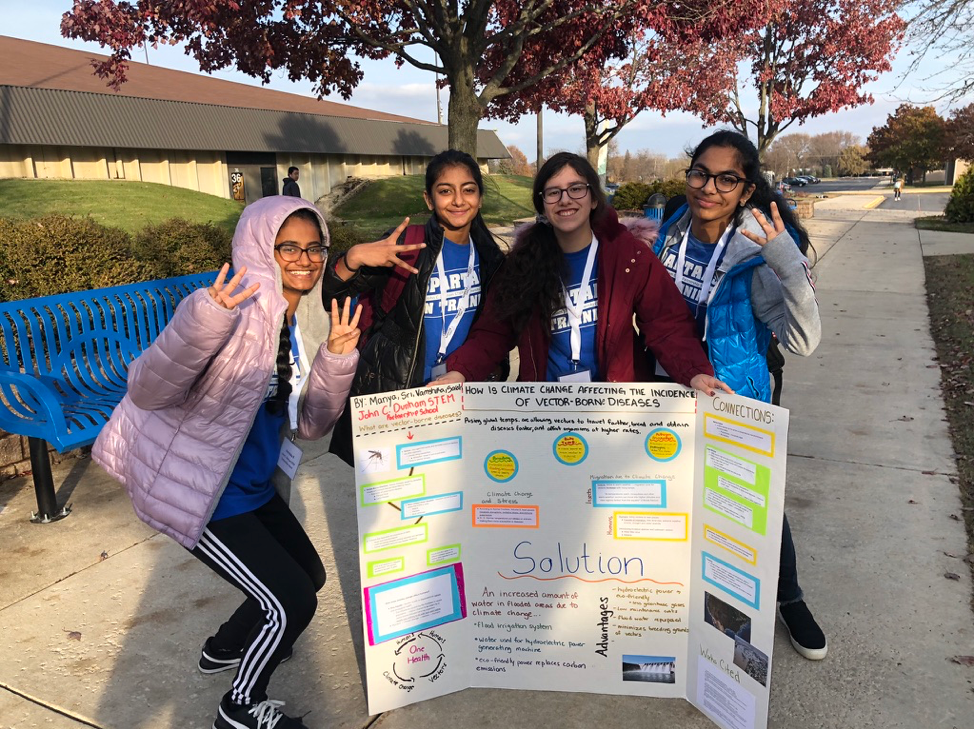
Project Description: According to the 2019 UN Madrid Climate Change Conference, rising global emissions are responsible for severe weather and biodiversity loss around the globe. As of now, the average global temperature has risen by about 1.1OC since the pre-industrial era, with the rise to 2OC1predicted to cause the worst climate impacts to date. The goal of CO2RS is to reduce the impact of CO2 emissions on the environment by combining carbon scrubbers, the Hybrid-Na-CO2system, and a dual-engine to convert CO2 into electricity and methane to fuel an environmentally friendly car. CO2RS’s implementation could help combat the many problems that are caused by global temperature rises, such as the high risk of species loss and extinction, and the negative impact that severe weather has on human health and economies.prov